“5 species” search results (2000)

The growing process of coffee beans the growing conditions of coffee beans
At present, coffee trees are mainly planted in Arabica, Robusta and Liberia. Arabica species produced in Elaraby Sinia (now Ethiopia) have the highest quality of the three major tree species, accounting for 2/3 of the world's coffee production. Coffee beans are oval and flat, characterized by fragrance and good quality. Robusta seeds are produced in Congo, Africa, with strong disease resistance, high temperature resistance and fruit.
2016-07-16 Coffee beans planting growth process conditions current coffee main tree species
Classification of coffee varieties which is the best way to grind coffee
Arabica bean coffee tree can be divided into two main varieties: Arabica species (Coffea Arabica) and Robusta species (Coffea Robusta/Coffea Canephora). There are also some minor species, such as the Liberian species (Coffea Liberica) and the Alabasta species (Coffea Arabusta), but they are rare on the market.
2016-06-08 Coffee variety classification grinding which way editing rabbi
Organ Classification of Coffee Coffee belongs to shallow root crops
Coffee is a shallow root crop, and the plants propagated with seeds have conical roots. Root system refers to the general name of root. The root morphological distribution and depth of shade varieties / soil conditions and agricultural technical measures are different. From the point of view of varieties, the roots of small / medium grain species are shallower, while those of large grain species are deeper. Under normal circumstances, there is a thick and short taproot and many well-developed lateral roots. Yunnan small-grain coffee has a 4-year-old fruit.
2015-06-05 Coffee organ classification shallow root crop coffee seed multiplication
Basic knowledge of high-quality coffee classification of various parts of coffee trees
1. Root coffee is a shallow root crop, and the plants propagated by seeds are conical roots. Root system refers to the general name of root. The root morphological distribution and depth of shade varieties / soil conditions and agricultural technical measures are different. From the point of view of varieties, the roots of small / medium grain species are shallower, while those of large grain species are deeper. Under normal circumstances, there is a thick and short taproot and many well-developed lateral roots. Yunnan small-grain coffee has been growing for 3-4 years.
2014-11-13 Coffee knowledge coffee basics common sense classification
The various parts of the coffee plant decompose the shallow root crop of coffee.
Coffee is a shallow root crop, and the plants propagated with seeds have conical roots. Root system refers to the general name of root. The root morphological distribution and depth of shade varieties / soil conditions and agricultural technical measures are different. From the point of view of varieties, the roots of small / medium grain species are shallower, while those of large grain species are deeper. Under normal circumstances, there is a thick and short taproot and many well-developed lateral roots. Yunnan small-grain coffee has a 4-year-old fruit.
2015-09-23 Coffee plants parts decomposition shallow roots crops coffee species
The most basic knowledge that should be understood-- the three native beans of coffee
Coffee three primary bean species Arabica species (arabica): the origin of Ethiopia, equivalent to the rich and handsome coffee beans, is a precious coffee bean species. It is planted at an altitude of 700-2000 meters, accounting for 75-80% of the world coffee production. It has excellent flavor and aroma, low caffeine content, about 1-1.5% of its weight, but for dryness, frost damage and disease.
2016-09-05 Most should understand basic knowledge coffee three original bean seed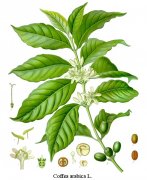
Coffee cultivation techniques detailed explanation of planting knowledge of Coffee trees
Coffee, cocoa and tea are called the three major beverages in the world, and their output, consumption and output value all rank first. In addition to being used as a beverage, coffee can also extract caffeine and coffee oil; in medicine, it can be used as an anesthetic, stimulant and diuretic cardiotonic agent. Coffee pulp can be used to make wine, vinegar, pectin and molasses; dried pulp can be used as animal feed; dried fruit shell can be used as fertilizer and burning
2015-02-16 Coffee cultivation techniques planting knowledge detailed explanation
Boutique coffee general knowledge about raw coffee beans
A coffee tree can bear about 3-5 kilograms of coffee cherries and can be refined into 1/5 weight raw coffee beans. Among them, through the hands and time of many people, coffee cherries are transformed into raw coffee beans. Arabica species and Robusta species account for about 2/3 of the world's coffee production, and are not suitable for growing in areas with high temperature, low temperature, more rain and less rain. The beans are oval and shoulder-flat.
2014-11-13 Coffee knowledge coffee common sense coffee raw beans
How many coffee producing countries are there in the world?
1. Arabica species (scientific name Coffea arabica) Arabica species is native to Ethiopia's Abyssinian plateau (now Ethiopia plateau), early mainly as a medicinal food (Islamic lovers used as a healing medicine or to wake up), 13th century developed the habit of baking and drinking, 16th century introduced to Europe via Arabia
2016-06-06 coffee cultivation condition world on how much country of production rabbi kasu scientific name
Coffee trees and three kinds of native species
Coffee trees and three kinds of native coffee trees are evergreen shrubs or trees belonging to the Rubiaceae family. Wild coffee trees can grow to a height of 5 to 10 meters, but coffee trees planted on the manor are often cut to a height of less than 2 meters in order to increase fruit and facilitate harvesting. The opposite leaf of the coffee tree is long oval, the leaf surface is smooth, the end branch is very long, the branch is few, and the flower is white.
2014-09-11 Coffee trees coffee trees coffee knowledge
The growth habits of coffee the distribution of coffee the three main types of coffee
Coffee trees grow in national farms in tropical or subtropical regions known as coffee belts centered at the equator and between latitudes of 25 degrees south and north. At present, coffee is produced in more than 60 countries, widely distributed in South America, Central America, the West Indies, Asia, Africa, Arabia, the South Pacific and Oceania. In terms of output, Brazil, which accounts for the first place in the world, accounts for about 30%; the second
2016-05-25 Coffee growth habit distribution three major species coffee tree growing equator
Introduction to the planting Environment of Burundian Coffee Flavor description and Grinding degree characteristics
Burundian coffee bears a striking resemblance to neighboring Rwanda, where coffee from the two countries is often confused. Burundian coffee is mainly grown in bourbon, with traditional wet processing of coffee cherries. Its boutique coffee is characterized by elegant sweetness and bright citrus aromas. This batch belongs to the Bourbon species microbatch country: Burundian growth: 1750 males
2016-10-15 Burundi coffee flavor description grinding characteristics variety planting environment introduction
Coffee beans Coffee varieties Yunnan Arabica coffee
Yunnan is China's main coffee producing area. Yunnan is located in the subtropical mountain climate zone south of the Tropic of Cancer, with unique plateau red soil, fertile loose soil, mild climate, especially suitable for planting small coffee species. Yunnan coffee was first introduced by French missionaries in 1902. Up to now, 24 coffee trees with more than 90 years old still grow in Zhukula Township, Binchuan County. 1914 Ruili Jing
2015-01-04 boutique coffee beans coffee type yunnan small china essential
A coffee tree can produce about 3-5 kg of coffee cherries.
A coffee tree can produce about 3-5 kilograms of coffee cherries and can be refined into one-fifth of the weight of green coffee beans. Among them, coffee cherries are transformed into green coffee beans by many hands and time. Arabica and Robusta Arabica accounts for about two-thirds of the world's coffee production and is not suitable for growing in areas with high temperature, low temperature, much rain and little rain. The beans are oval and flat
2015-06-05 About Coffee beans One tree Coffee Tree approx. Can bear 3 -5 kg Cherry
Boutique Coffee explains in detail the three native species of coffee
There are about 40 species of coffee plants, but only one can produce coffee beans of commercial value. Arabica, Robusta and Liberia are known as the three major native species of coffee: Arabica species are native to the Ethiopian plateau. Arabica coffee accounts for 75%, 80% of all coffee varieties, and its excellent flavor and aroma make it these.
2014-11-08 Coffee knowledge boutique coffee science coffee varieties
Coffee basic knowledge three native species of coffee
There are about 40 species of coffee plants, but only one can produce coffee beans of commercial value. Arabica, Robusta and Liberia are known as the three major native species of coffee: Arabica species are native to the Ethiopian plateau. Arabica coffee accounts for 75%, 80% of all coffee varieties, and its excellent flavor and aroma make it these.
2015-04-22 Coffee basics common sense three original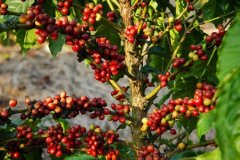
Coffee basics two coffee varieties of coffee beans
Linnaeus (Swedish naturalist) classifies coffee plants into the Rubiaceae family, such as gardenia. The great naturalist named it Coffea. Although wild plants can grow as high as 10-12 meters, the plantations are about 3 to 5 meters high, with the exception of Colombia, where tree species rarely exceed 2 meters. This makes farming and picking easier and more economical to cultivate. Leaves
2015-02-16 Coffee basics coffee beans two varieties
Costa Rican Coffee individual Coffee Historical Origin and quality
The history of coffee cultivation in Colombia can be traced back to the Spanish colonial era in the 16th century, and there are many theories about the history of coffee in Colombia: one: it is said to come from the island of Haiti in the Caribbean and from El Salvador in Central America. Second: in 1808, a priest introduced coffee beans to Colombia for the first time from the French Antilles via Venezuela. One of them
2016-05-25 Costa Rica coffee individual products history traceability origin quality Colombia species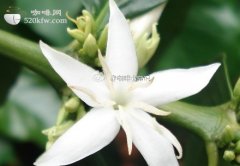
Coffee knowledge Coffee plants
Coffee plants: several to dozens of clusters in leaf axils, the second to fifth flowers on a flower axis. White, fragrant. The middle and small seeds have 5 petals, and the large seeds have 7 - 8 petals. Flowers tubular, terete. The stamen number is many and petal number is same, stamen stigma is bifid, ovary inferior, it is 2 rooms commonly, also have 1 room or 3 rooms. Insect-matched flowers, large-grain seeds and small-grain seeds
2014-09-17 Coffee knowledge coffee knowledge coffee encyclopedia coffee plants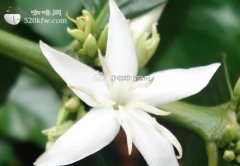
Coffee plants
Coffee plants: several to dozens of clusters in leaf axils, the second to fifth flowers on a flower axis. White, fragrant. The middle and small seeds have 5 petals, and the large seeds have 7 - 8 petals. Flowers tubular, terete. The stamen number is many and petal number is same, stamen stigma is bifid, ovary inferior, it is 2 rooms commonly, also have 1 room or 3 rooms. Insect-matched flowers, large-grain seeds and small-grain seeds
2014-09-19 Coffee knowledge Coffee encyclopedia Coffee plants